
A battery management system (BMS) can provide battery monitoring, protection, balancing, state-of-charge estimation and communications. Actual functions depend on hardware, firmware and system configuration. Project acceptance should verify the relevant version and test results.
Consider three layers of functionality
The first layer is measurement: cell or module voltage, current and temperature. The second is decision and action: issuing alarms or triggering protection when defined conditions occur. The third is data exchange and coordination with controllers, chargers or higher-level systems. TI’s battery management information describes monitoring, balancing and overvoltage, undervoltage and overcurrent protection, providing a reference for these roles. Reference: TI — Battery Management Functions.
Define trigger and recovery conditions for protection
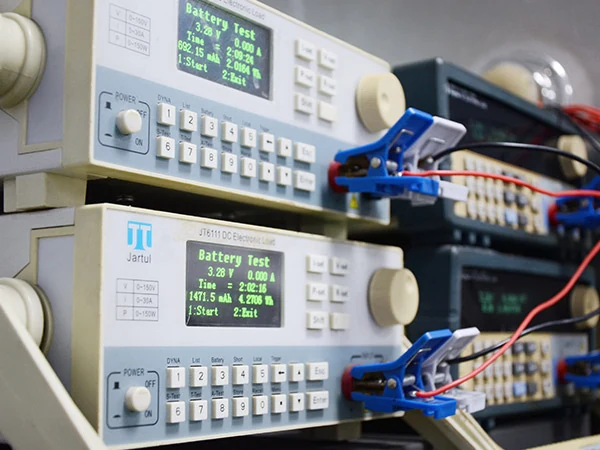
For each function, define the measurement source, trigger, response, alarm record and recovery method. Describe continuous loads separately from short peaks to avoid treating normal operation as a fault. Cells, power components and equipment conditions determine thresholds and delays, which must be verified using suitable test equipment.
What should communications integration verify?
- Protocol version, data format, update interval and node identification.
- Correct mapping of state of charge, voltage, current, temperature and fault status.
- System behavior during communications loss, equipment restart and protection recovery.
- Permissions for parameter changes, plus configuration backups and version records at delivery.
Keep engineering evidence in an acceptance matrix
Link each requirement to a test method, acceptance condition and record number, then integrate the battery with the actual equipment. Power tool battery designs also consider measurement accuracy, standby consumption and charge indication, illustrating why BMS selection must reflect the equipment’s task. Reference: TI — Power Tool Battery Design. External documentation should match the specification, firmware version and tested sample. This guide helps organize requirements and does not replace design and testing procedures for a specific battery pack.
Frequently asked questions
Does a BMS make any charger suitable?
The charger must still match the battery chemistry, voltage and current limits. Equipment controls and protection coordination also need validation.
Does CAN support make a BMS compatible with all inverters?
Check the protocol content, version and exact equipment model, then confirm compatibility with integration test records.
This guide provides general engineering selection information. Confirm the configuration, testing and documentation requirements for the specific product and target market.